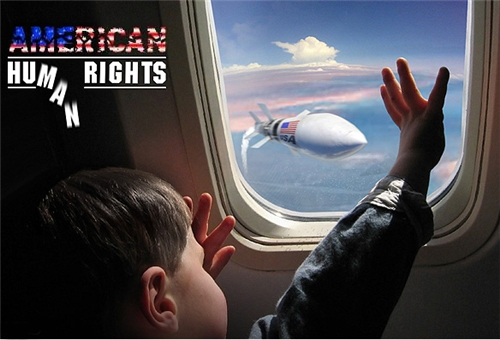
Rasa News Agency Reports – On July 3, 1988, an Iranian aircraft registered on the radar screen of the USS Vincennes. The US Navy officers on the bridge identified the approaching aircraft as an Iranian Air Force F-14 Tomcat. Though they would later claim that they tried to reach the aircraft on military and civilian frequencies, they failed to try air traffic control, which would have probably cleared the air. Instead, as the aircraft drew nearer, the Americans fired two guided missiles at their target: a civilian Airbus A300B2, killing 290 civilians, including 66 children, en route to Dubai.
Twenty-five years ago, the Iran-Iraq war was well into its eighth bloody year. Then, as now, Iran was considered the foe; and Iraq, the ally. The US government never published a complete report of the investigation and continued to assert that the crew of the USS Vincennes mistakenly identified the aircraft as a fighter jet and acted in self defense. While it expressed its regrets, the United States failed to condemn what happened and never apologized to the Iranian people. The Iranian government asked several times -- rhetorically -- how a guided missile cruiser, such as the USS Vincennes, equipped with the latest in electronic technology, was unable to distinguish a slowly ascending Airbus from a much smaller fighter jet. After Iran sued the United States in the International Court of Justice, the Americans agreed to pay $61.8 million in compensation to the victims' families. However, it did not escape any Iranian that the United States extracted $1.7 billion, a sum 30 times greater, from Libya as compensation for the victims of the Pan Am Lockerbie bombing, which took place the same year.
The immediate aftermath of the tragedy played a significant role in Iranian politics and influenced some major decisions. Many Iranians, including several politicians, read the attack as a signal that the United States would enter the war on Iraq's side. In fact, Iran accepted a ceasefire less than a month later, in part because the Iranian leadership was certain Iran could not prevail in a war against both Iraq and the United Stated, at least not if the war were waged in a conventional manner.
More than two decades later, the attack continues to permeate Iranian social psychology and fuel the strategic thinking of its military leadership. Many Iranians recall the event with a bitter sense of vulnerability. A foreign government, the United States, which was not in war with them, used brutal and lethal force against Iranian civilians.
Reza, who served as a volunteer Basiji from 1987-1988 and teaches chemistry now, admits he doesn't think about what happened too often. "Still, when I do," he said, "I remember how nobody cared! These were Iranian civilians who were killed and there was no condemnation."
For other Iranians, the lesson from the attack helps inform their thinking on current issues. Mohammad, a 60-year-old shopkeeper, said it made him side with the government in the nuclear standoff. "Look," he said to me, "if Iran had power -- and nuclear power -- they would not have done that to us. I know we are paying a high price for it now, but we have to have it. Otherwise, those Americans do as it pleases them, and there is no one -- absolutely no one -- to ask them why."
Though the sentiment he expressed was raw and probably not well thought out, it did not lack sincerity. In fact, for many Iranians, the shooting down of IR655 reminded them of how defenseless they were in their own region and in their own waters and airspace. The military has capitalized on this. Since the end of war with Iraq, Iran's military leadership operates on the presumption that it is incapable of winning a conventional war against a superpower. It also assumes that should such a conflict occur, Iran should not expect any sympathy or help from the international community. The silence over IR655, though convenient at the time for many US allies, continues to haunt many Iranians. Predictably, it has been used by state media to convince segments of the public that Iran stands to gain little or no justice from engaging with the rest of the world. Many Iranian hardliners continue to use the tragedy to argue for a buildup and a militarily powerful Iran. They also use it to underscore the West's dual standards, should anyone forget.
Although no one speaks of IR655 in the United States, it poses a simple and important question about engagement in Iran to almost anyone who thinks of Iran. What does the United States want? A democratic Iran and a government that capitulates to it, or the one that serves its interests? Will the United States again sacrifice Iranian lives to force the Iranian government to accept a short-term political order?
For those with a longer memory span, it's difficult to dismiss some of these concerns particularly when you recall that the reckless behavior of the USS Vincennes commanding officer earned him the Legion of Merits, "a military decoration of the United States armed forces that is awarded for exceptionally meritorious conduct in the performance of outstanding services and achievements." For many Iranians, this is utterly incomprehensible.